



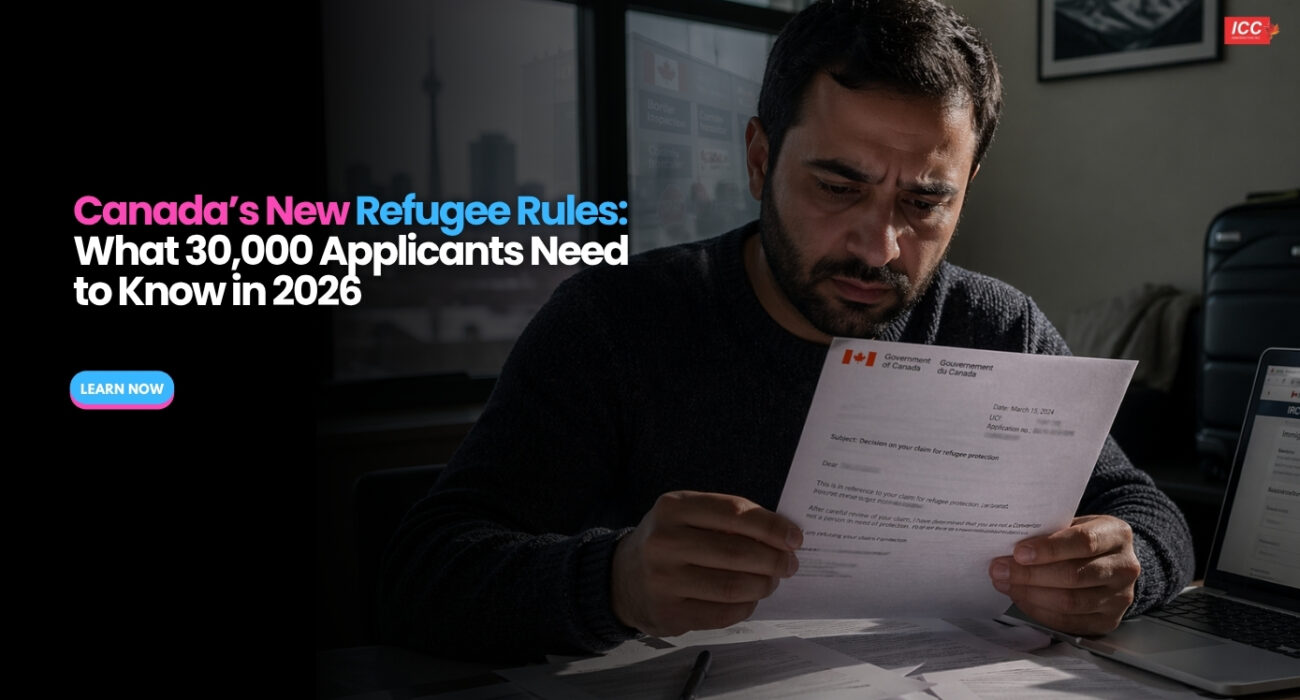
Canada’s immigration system is undergoing a significant shift, and thousands of refugee claimants are now directly impacted. In April 2026, Immigration, Refugees and Citizenship Canada (IRCC) began sending letters to nearly 30,000 individuals, warning that they may be ineligible for refugee hearings under newly tightened rules introduced through Bill C-12.
This development has raised serious concerns among immigration lawyers, advocates, and affected families especially around fairness, due process, and the future of asylum seekers in Canada.
What Has Changed Under Bill C-12?
The newly passed legislation introduces stricter timelines and eligibility rules for refugee claims. One of the most impactful changes is:
- Refugee claimants who entered Canada more than one year before applying may now be deemed ineligible.
- This rule is retroactive to June 24, 2020, and applies to claims submitted on or after June 3, 2025.
Additionally, individuals who crossed into Canada from the U.S. at irregular border points (such as Roxham Road) and failed to make a claim within 14 days may also be disqualified from having their case heard.
These changes directly affect thousands of people who were previously expecting a full hearing before the Immigration and Refugee Board (IRB).
What Are Procedural Fairness Letters?
Many applicants are receiving what IRCC calls procedural fairness letters. These are not deportation notices but they are serious.
- Applicants are given 21 days to submit additional evidence or explanations.
- Officers then assess whether the case should proceed to a refugee hearing.
However, if the claim is deemed ineligible, individuals may receive a second letter instructing them to leave Canada immediately, or risk a removal order.
Why Are Lawyers Concerned?
Immigration lawyers across Canada are raising red flags about the process. Their main concerns include:
1. Lack of In-Person Hearings
Previously, refugee claimants could present their case directly to a decision-maker. Now, many may have to rely solely on written submissions. Lawyers argue that:
- Written forms cannot fully capture personal risk or emotional context.
- Applicants lose the opportunity to clarify inconsistencies.
2. Family Separation
There are reported cases where:
- Some family members are deemed eligible while others are not.
- This creates uncertainty and emotional distress for families already in vulnerable situations.
3. Risk of Misunderstanding Rights
Some letters instruct applicants to leave Canada immediately. However:
- Individuals may still have the right to apply for a Pre-Removal Risk Assessment (PRRA).
- Lawyers warn that misleading wording could cause people to leave without fully understanding their legal options.
4. Limited Access to PRRA
In some cases:
- Applicants may not qualify for PRRA due to country-specific restrictions.
- This can leave individuals in a legal limbo, unable to move forward or reunite with family.
What Is a PRRA?
A Pre-Removal Risk Assessment (PRRA) allows individuals facing removal to explain the risks they may face if returned to their home country.
However, unlike a refugee hearing:
- It is typically a paper-based process
- There is no in-person testimony
- The outcome depends heavily on documentation quality
This makes professional guidance more important than ever.
The Bigger Picture: A Shift in Canada’s Asylum System
The new measures reflect Canada’s effort to:
- Reduce backlogs in the refugee system
- Discourage delayed asylum claims
- Tighten border and eligibility controls
But critics argue that these changes may come at the cost of fairness and access to justice, especially for vulnerable individuals unfamiliar with the legal system.
How ICC Immigration Can Help You Secure Your Future in Canada
Instead of navigating uncertainty, it’s important to explore legal and structured immigration pathways that offer long-term stability.
ICC Immigration is committed to helping you make informed decisions and avoid the risks associated with asylum claims.
Our Services:
- Permanent Residency Applications
We guide you through Express Entry, Provincial Nominee Programs (PNPs), and other PR pathways to ensure a smooth and compliant application process. - Work Permits and Study Permits
Build your future in Canada through temporary pathways that can lead to Permanent Residency in Canada. - Family Sponsorships
Reunite with your loved ones and secure your immigration status through sponsorship programs. - Expert Legal Advice
Canadian immigration laws are complex and evolving. Our team provides professional legal guidance to maximize your chances of success.
Take Control of Your Immigration Journey
Relying solely on asylum pathways can be unpredictable—especially with changing laws like Bill C-12. Choosing structured immigration programs gives you:
- Stability
- Security
- A clear pathway to Permanent Residency in Canada
Whether you are already in Canada or planning your move, ICC Immigration is here to support you with the right strategy and expert advice.
The latest changes to Canada’s refugee system are a wake-up call for many applicants. With stricter timelines, limited hearings, and increased scrutiny, it’s more important than ever to stay informed and seek professional help.
If you or someone you know has received a notice from IRCC, don’t ignore it and don’t navigate it alone.