



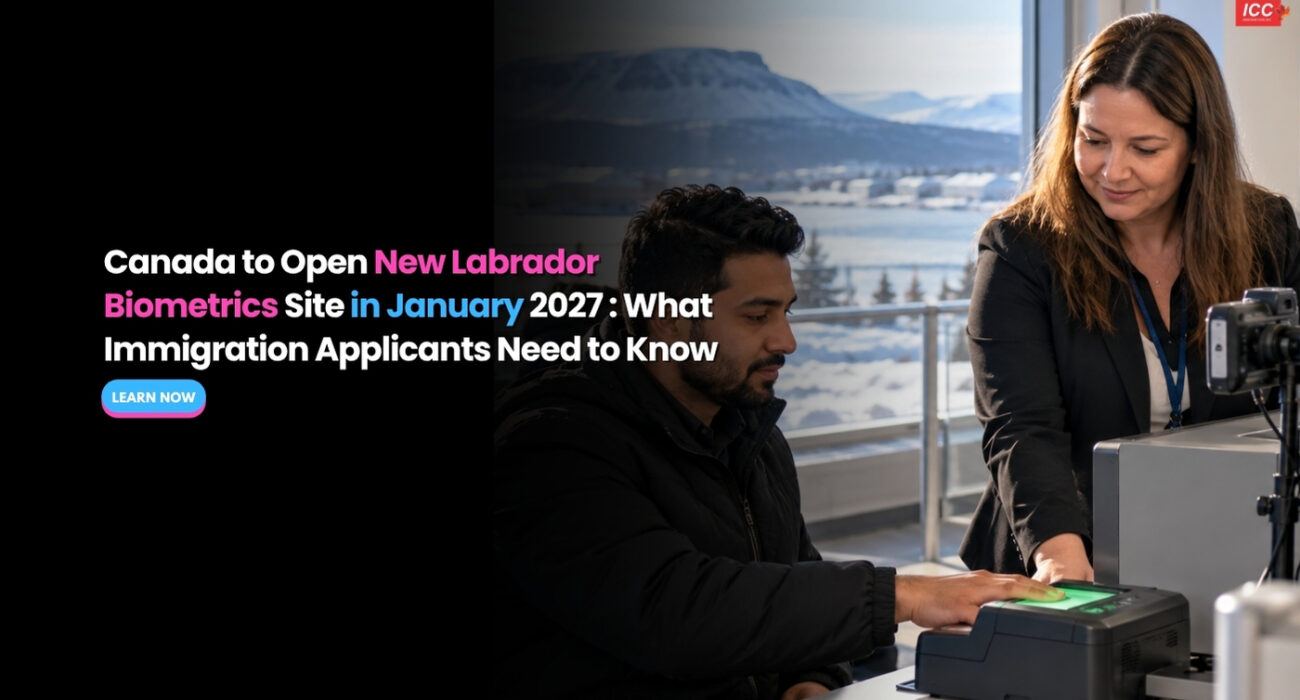
Canada is expanding access to immigration services in Labrador with a new biometrics collection site in Happy Valley-Goose Bay, scheduled to begin operations in January 2027. The new facility is expected to make the immigration application process more accessible for people living in Labrador who currently have to travel significant distances to provide their fingerprints and photographs.
The announcement was made by Canada’s Immigration Minister Lena Diab on September 29, 2026, during a press conference in St. John’s, Newfoundland and Labrador.
What Does the New Labrador Biometrics Site Mean?
Biometrics are an important part of many Canadian immigration applications. They generally consist of an applicant’s fingerprints and photograph and are used by the Canadian government as part of identity verification and immigration screening.
At present, many applicants living in Labrador need to travel to St. John’s, Newfoundland, to complete their biometrics. For residents of Happy Valley-Goose Bay, this can involve travelling approximately 900 kilometres by air or roughly 1,600 kilometres by car and ferry.
The planned Happy Valley-Goose Bay biometrics site will provide a much more convenient option for eligible applicants once it becomes operational.
Happy Valley-Goose Bay is the largest population centre in Labrador, with a population of 8,040 recorded in the 2021 Census.
Who May Need to Give Biometrics for Canadian Immigration?
Biometrics can be required for a range of applications involving temporary and permanent immigration to Canada.
Depending on an applicant’s circumstances, biometrics may be required when applying for:
- Canada work permits
- Canada study permits
- Visitor visas
- Permanent residence in Canada
- Certain other immigration documents and applications
Biometrics may also be relevant when renewing a permanent resident card for individuals who were previously exempt because of their age when they initially applied for permanent residence.
Applicants should always check the specific biometrics instructions issued for their application rather than assuming that biometrics are either required or exempt.
Why Biometrics Matter in the Canadian Immigration Process
Providing biometrics is an important procedural step for many Canada immigration applications. If an applicant receives a biometrics instruction letter, completing the requirement within the specified timeframe can help prevent unnecessary delays.
The opening of a local facility in Labrador could therefore reduce the travel burden for applicants and make it easier for people in the region to complete this stage of their immigration process.
The new location does not change the underlying eligibility requirements for Canadian immigration programs. Applicants will still need to meet the requirements of the particular immigration pathway they are applying under.
Planning Your Long-Term Immigration Journey
For people hoping to establish themselves permanently in Canada, biometrics are only one part of the overall immigration process. Choosing the right immigration pathway at the beginning can be equally important.
Depending on your qualifications and circumstances, options may include Express Entry, Provincial Nominee Programs (PNPs), work permits, study permits, and family sponsorship.
It is important to understand the eligibility criteria, documentation requirements and long-term implications of each pathway before submitting an application.
How ICC Immigration Can Help You Secure Your Future in Canada
ICC Immigration helps individuals and families understand their options and plan their Canadian immigration journey based on their individual circumstances.
Our services include:
Permanent Residency Applications
We assist with Canada PR applications through programs such as Express Entry, Provincial Nominee Programs (PNPs) and other available immigration pathways.
Work and Study Permits
We help applicants understand available Canada work permit and Canada study permit options and how temporary status may fit into a longer-term immigration strategy.
Family Sponsorship
If you have eligible family members in Canada, our team can assist with navigating the family sponsorship Canada process and the documentation involved.
Professional Immigration Guidance
Canadian immigration rules can be complex and can change over time. Professional guidance can help applicants understand current requirements, identify potential issues and prepare applications accurately.
Rather than relying on an uncertain immigration route, applicants should explore legitimate pathways that may provide a more structured route toward permanent residency in Canada.
Whether you are already living in Canada or preparing your immigration journey from abroad, ICC Immigration can help you understand your options and navigate the application process with greater clarity and confidence.